Basement flooding is one of the most common types of water damage experienced by homeowners. Because basements sit below ground level, they are especially vulnerable to flooding during storms, sump pump failures, and plumbing leaks.
Grand Rapids Water Damage Pros provides professional basement flood cleanup in Grand Rapids, helping homeowners remove water and restore their property quickly.
Our technicians respond quickly with pumps and water extraction equipment designed to remove water from basements and begin structural drying immediately.
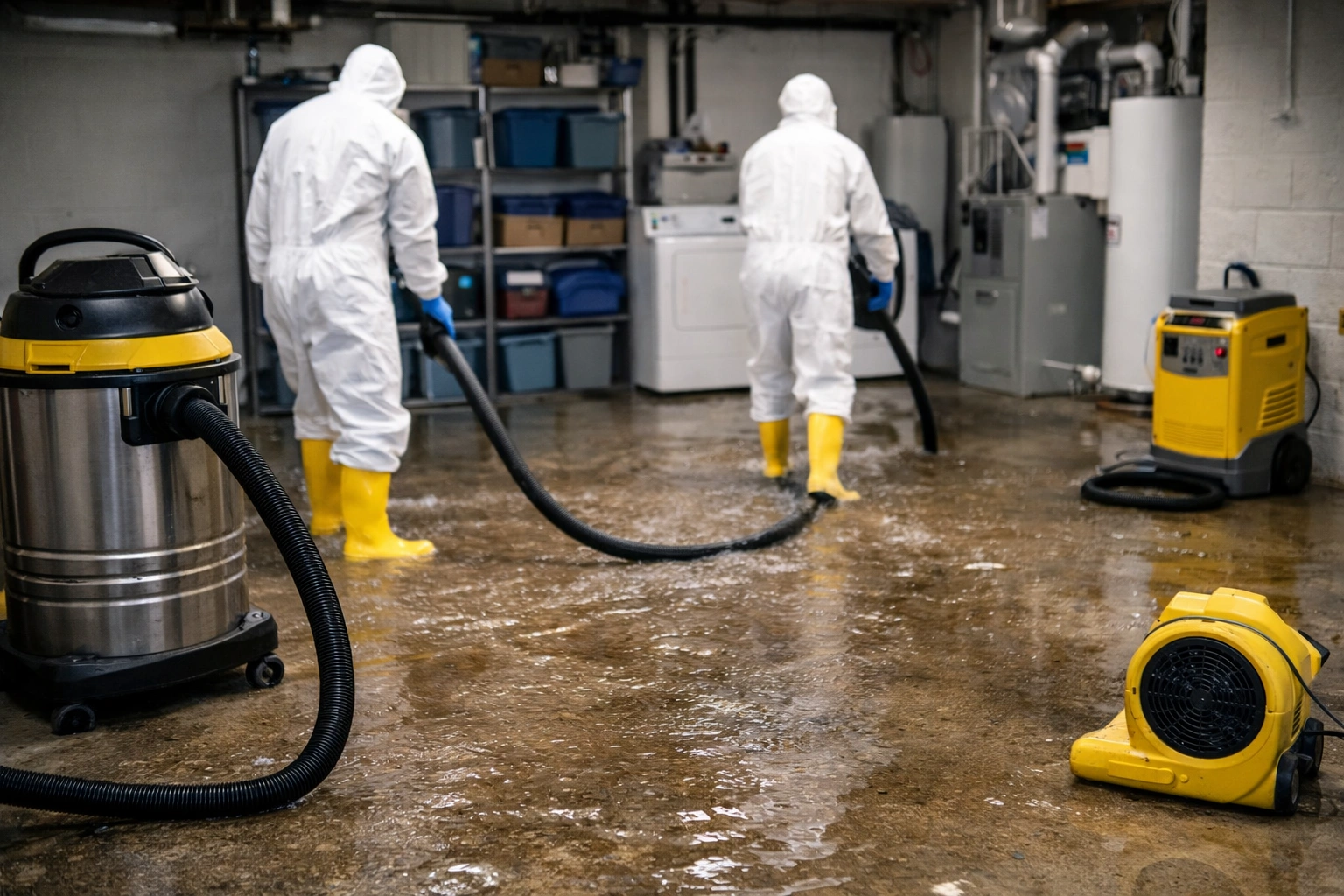
Basement flooding can occur for several reasons — our technicians respond to all of them quickly and thoroughly
Severe storms can overwhelm drainage systems and allow water to enter the basement through window wells, foundation cracks, and inadequate grading that directs runoff toward the structure.
Storm water that enters a basement can carry soil and debris, requiring thorough cleanup beyond simple water extraction. If your basement floods during a storm, fast emergency water extraction is essential to limit damage.
Get Emergency Help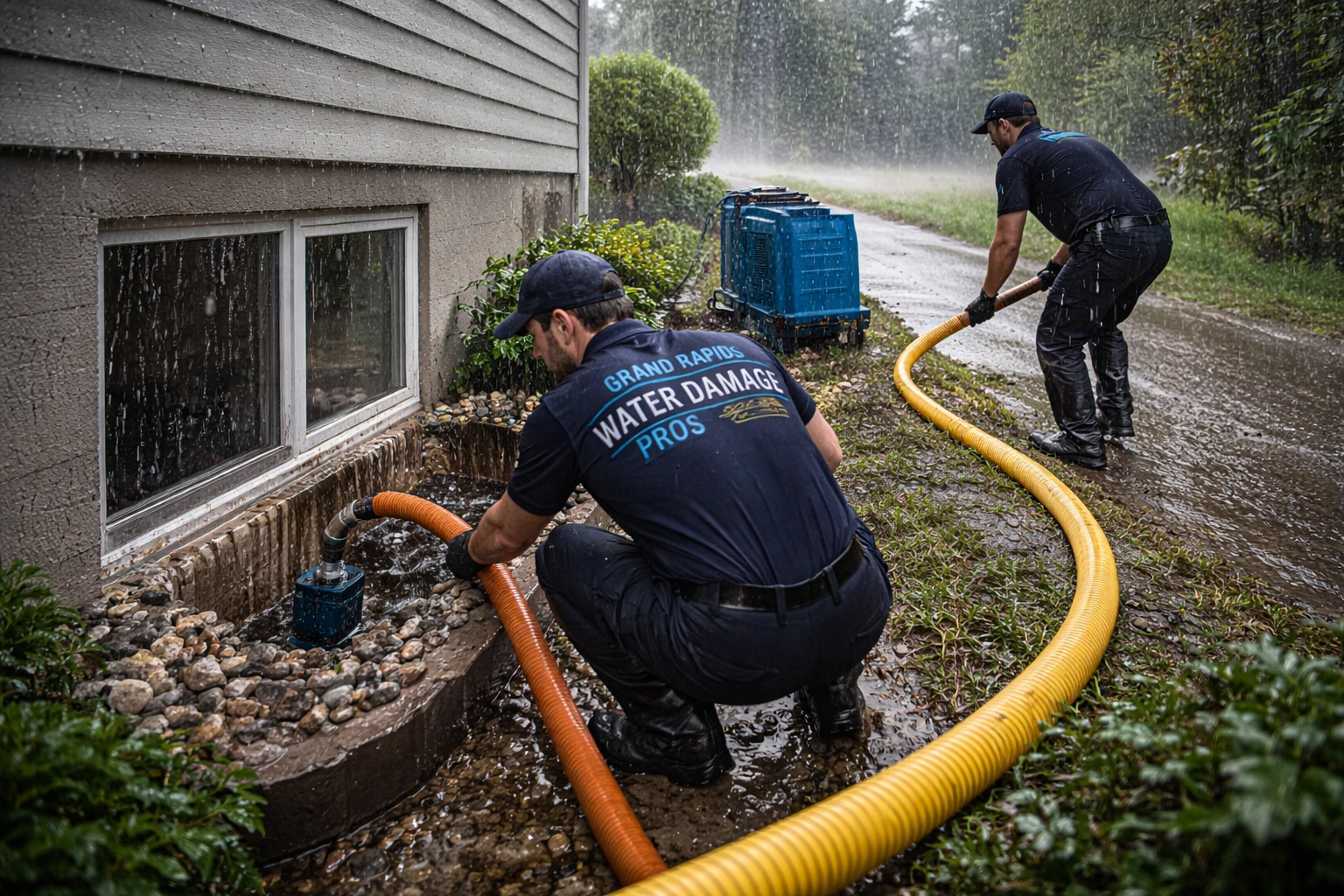
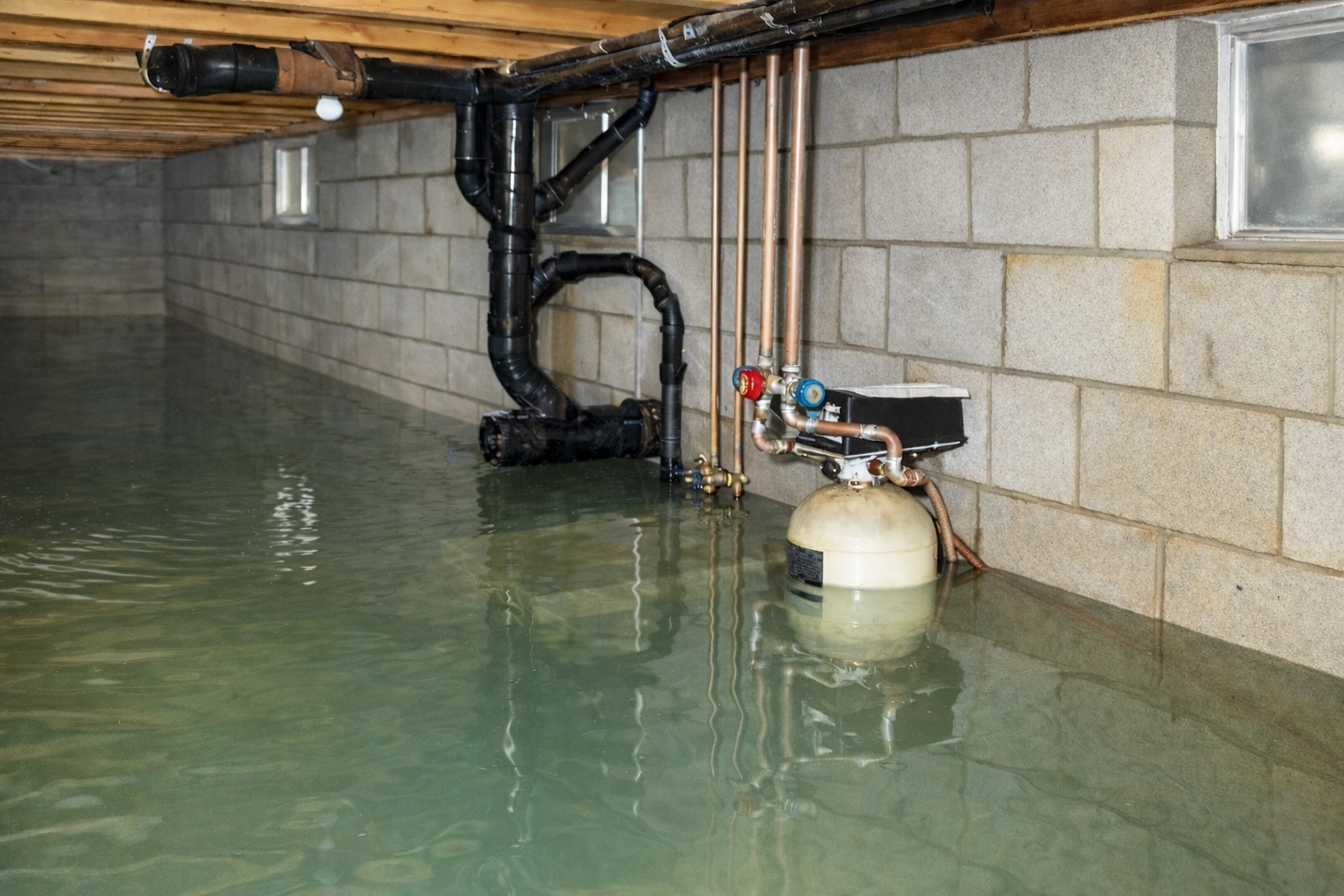
When sump pumps stop working during heavy rain — due to mechanical failure, power outage, or a float switch malfunction — groundwater can quickly accumulate in the basement.
Our technicians respond immediately to pump out all standing water, extract residual moisture from the concrete slab and lower wall sections, and deploy industrial drying systems to prevent mold growth and protect your foundation.
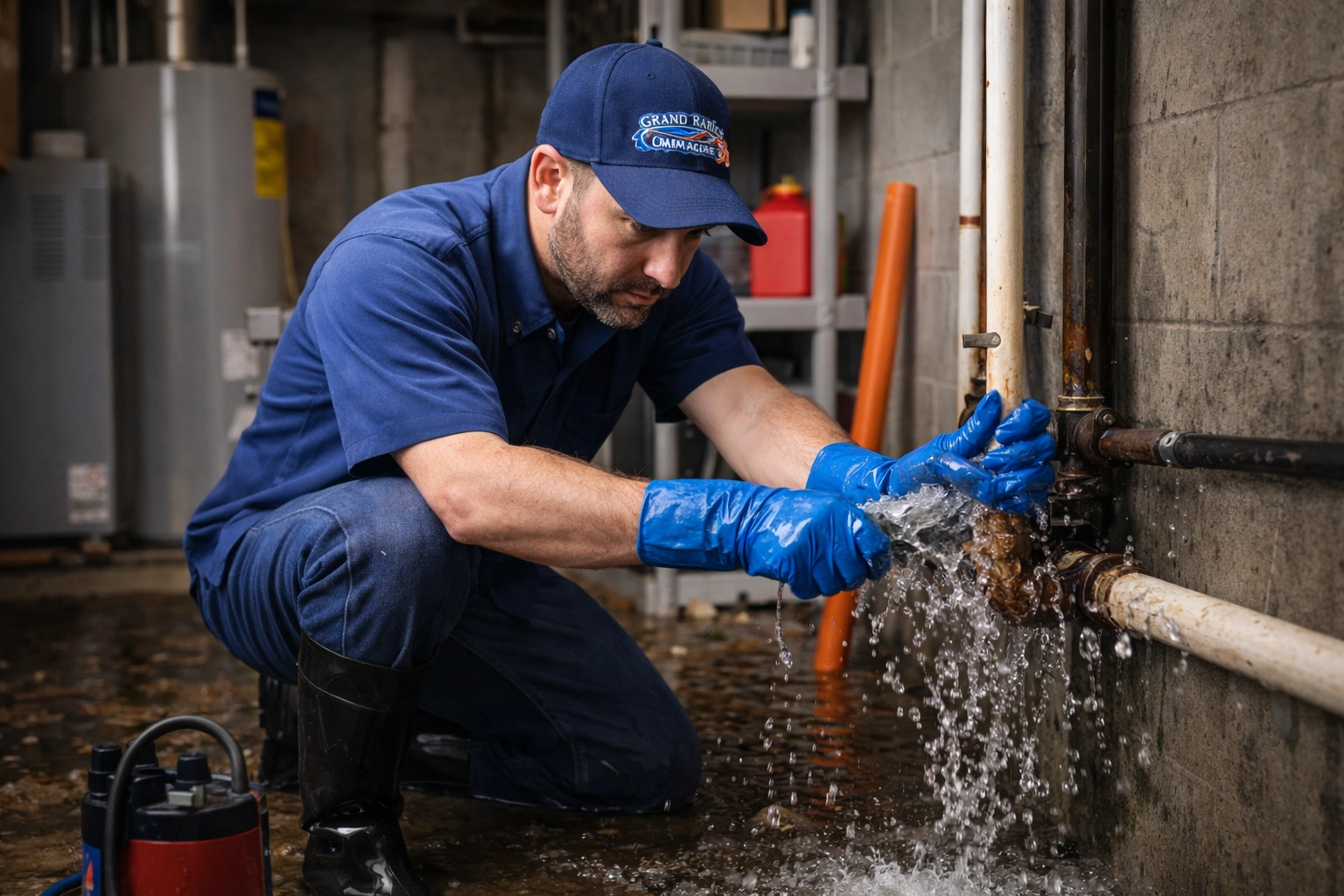
Burst pipes or leaking plumbing systems can release significant amounts of water into the basement. Burst pipes, failed water heaters, leaking washing machine hoses, and broken supply lines are all common sources of basement water damage.
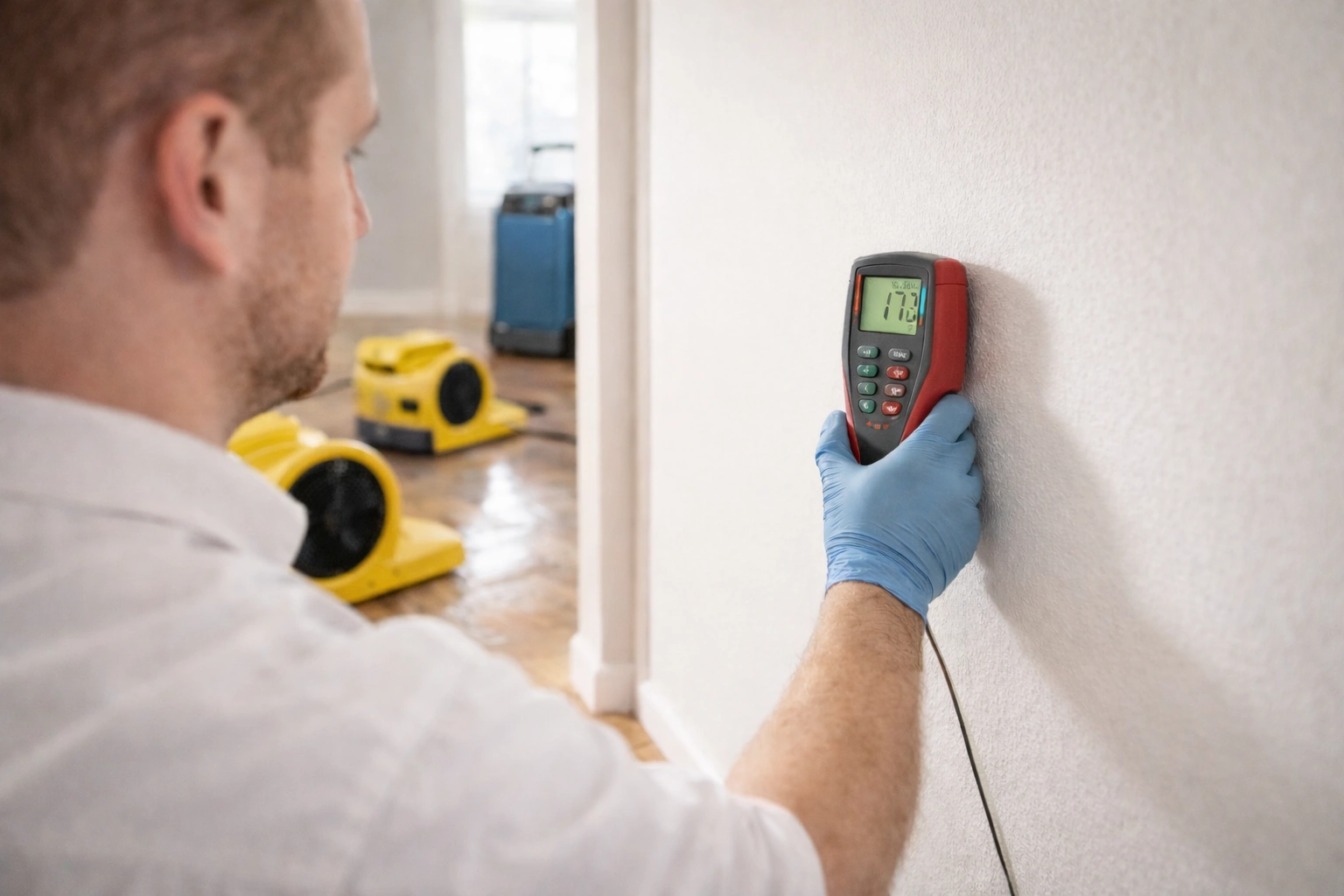
Our team extracts all standing water, uses moisture meters to detect hidden moisture inside walls and under flooring, and positions commercial drying equipment to dry all affected materials completely.
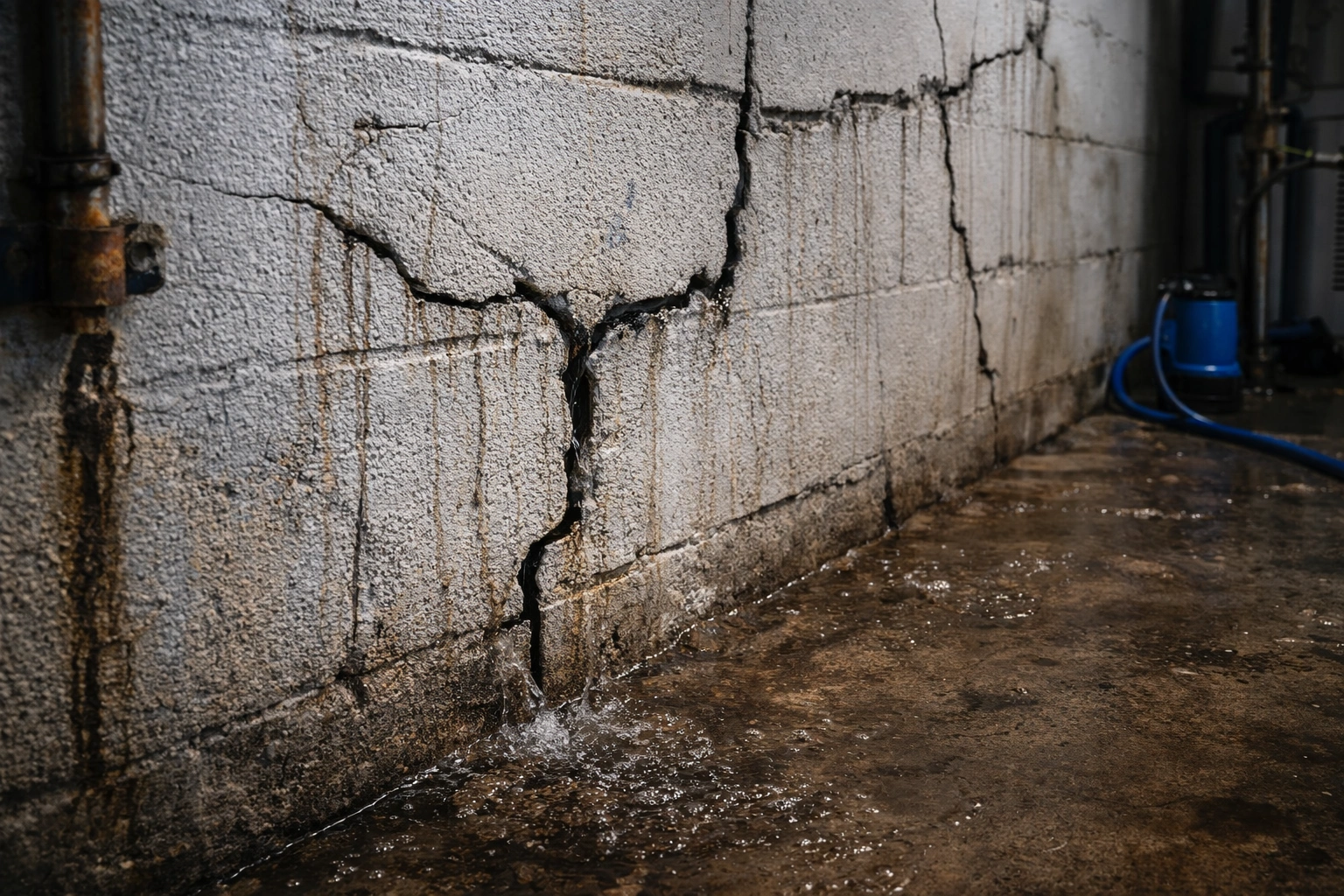
Cracks in foundation walls can allow groundwater to seep inside, especially during periods of heavy rainfall or when the soil around the foundation becomes saturated. Over time, even small cracks can allow significant water intrusion.
We document all damage thoroughly for insurance purposes and work to salvage as much of the affected space as possible. When materials must be removed, we do so carefully and systematically to protect the areas that remain intact.
Our technicians follow a structured restoration process designed to remove water and prevent further damage
We pump out standing water using professional submersible pumps and truck-mounted extraction equipment to remove water from the basement as quickly as possible.
Moisture meters identify hidden water inside walls, flooring, and structural materials that cannot be seen with the naked eye.
Industrial air movers and dehumidifiers remove moisture from the concrete slab, foundation walls, and all building materials until safe levels are confirmed.
Damaged materials are repaired or replaced as part of our water damage restoration in Grand Rapids services, returning your basement to its pre-flood condition.
Basements are particularly susceptible to mold growth after flooding because they are naturally humid environments. Fast drying and proper ventilation are essential to prevent mold from developing. Our technicians use professional drying equipment to remove moisture and protect the property.
We respond to basement flooding emergencies 24 hours a day, 7 days a week — the sooner water is removed, the lower the risk of mold taking hold.
Industrial air movers and dehumidifiers remove moisture far more effectively than consumer equipment, preventing conditions where mold can grow.
All affected surfaces are treated with EPA-registered antimicrobials to eliminate bacteria and prevent mold growth from occurring after cleanup.
Daily moisture readings confirm that all building materials have reached safe levels before equipment is removed and the job is closed.
Answers to common questions about basement flood cleanup in Grand Rapids
First, ensure the flooding has stopped or is under control — shut off water at the main if a pipe burst, or wait for the rain to subside if it is storm-related. Do not enter a flooded basement if there is any risk of electrical hazards from submerged outlets, panels, or appliances. Then call us immediately. The sooner we begin water extraction, the less damage your basement will sustain.
Water extraction can often be completed on the first day. Structural drying of the concrete slab, foundation walls, and any affected building materials typically takes 3 to 5 days, with our technicians monitoring moisture levels daily. Finished basement situations and sewage backups may take longer due to the need for material removal, disinfection, and air quality verification.
Coverage depends on the cause of flooding. Sudden and accidental water damage from burst pipes, appliance failures, and similar internal causes is typically covered by homeowner's insurance. Flooding from groundwater, storm surface water, or sewer backup may require separate endorsements. We document all damage thoroughly to help support your claim regardless of coverage type.
Yes — mold can begin growing within 24 to 48 hours in a flooded basement, especially in organic materials like wood framing, drywall, insulation, and carpet. This is why immediate water extraction and complete structural drying are so critical. Our process includes post-drying moisture verification and antimicrobial treatments specifically designed to prevent mold growth from occurring after cleanup.
Yes. We handle both finished and unfinished basement flood cleanup throughout Grand Rapids. Finished basements require careful assessment of drywall, flooring, trim, and insulation to determine what can be dried in place and what must be removed. We work to preserve as much of the finished space as possible while ensuring complete drying and eliminating all mold risk.
Absolutely. Sewage backups require Category 3 contaminated water cleanup protocols, and our technicians are trained and equipped to handle this safely. Our sewage backup cleanup process includes full extraction, removal of affected porous materials, hospital-grade disinfection, odor elimination, and post-cleanup safety testing to confirm your basement is safe before you use it again.
Grand Rapids Water Damage Pros responds to basement flooding emergencies throughout Grand Rapids and Kent County